A Brief History of Cuba, Illinois
Contributed by Joey Brewer
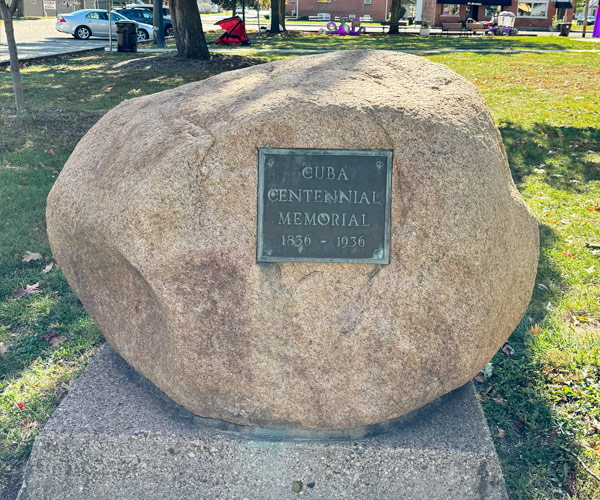
Cuba, Illinois traces its origins to the early settlement of Ephraim Brown, who laid out a town called Middletown in 1834, named for its location near the center of Fulton County. Soon after, a neighboring settlement called Centerville was platted, located just across an alley. In 1836, the two communities consolidated under the name Centerville, and in 1853, the town was incorporated as Cuba, Illinois. While no definitive historical record explains why the name “Cuba” was chosen, the name reflects a broader 19th-century American trend of drawing inspiration from global places.
From its earliest days, Cuba’s development was shaped by its natural resources. Fulton County is underlain by coal, and by the late 19th century Cuba became a center of coal production. The Fulton County Coal Company, organized in 1870, operated near the Toledo, Peoria & Western Railway depot, while additional shaft mines opened alongside major rail lines including the Chicago, Burlington & Quincy Railroad. By 1880, English miners had arrived in Cuba, followed by immigrants from other European countries. These miners and their families helped fuel a period of rapid growth, leading to a building boom in the early 20th century.
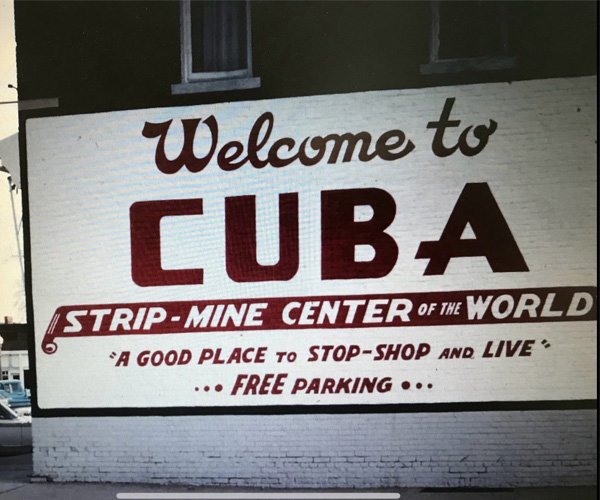
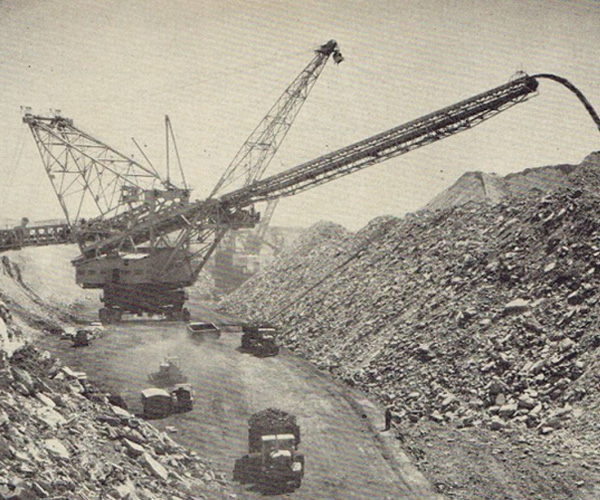
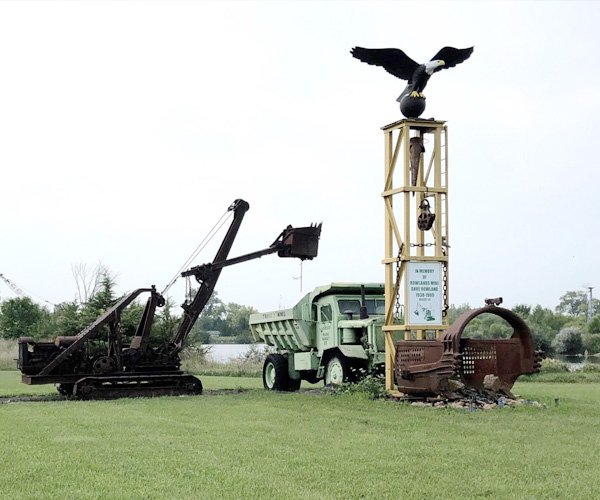
Although there was an early experiment with strip mining in 1903, large-scale surface mining did not fully take hold until 1936. As deep shaft mining declined (the last shaft mine closed in 1941) strip mining expanded dramatically. During the mid-20th century, Cuba became widely known as the strip mining capital of the world. Massive machinery reshaped the surrounding landscape, including some of the largest dirt-moving equipment ever used at the time. One rotary shovel operating near Cuba could move 1,000 cubic yards of overburden per hour, digging through layers nearly 100 feet thick to reach coal seams below.
The eventual closure of the strip mines had a profound economic impact on the community. Beginning in the late 1970s, Cuba experienced population decline and a reduction of commercial activity around the town square. Yet many historic buildings remain, standing as reminders of a once-thriving business district. Agriculture never disappeared, and the surrounding area continues to reflect Cuba’s dual identity as both a farming and mining community; including the presence of a nearby Amish community, which remains an important part of the region today.
Despite economic shifts, Cuba has continued to invest in its future; particularly through education and community stewardship.
Education and Innovation: A Legacy of Sustainability
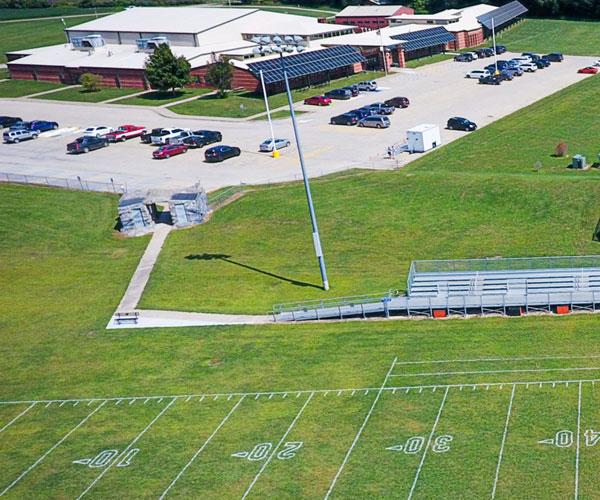
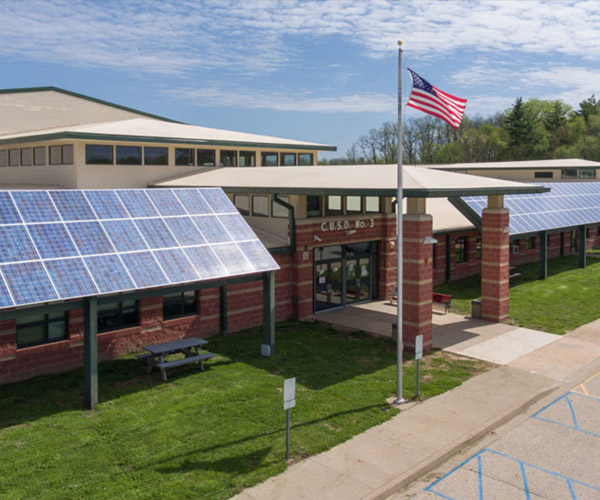
Cuba Middle/Senior High School has played a nationally recognized role in advancing energy-efficient and sustainable school design in rural Illinois. Located at the intersection of Illinois Routes 95 and 97, the school was among the first schools in Illinois to receive funding for sustainable design and renewable energy initiatives.
In 2002, Cuba was an early recipient of a Design & Commissioning grant, helping to pave the way for energy-efficient school construction across the state. Over time, the school added solar photovoltaic panels, upgraded lighting as new technologies became available, and installed a small wind turbine. These efforts positioned Cuba as a model for other Illinois schools.
The 65,000-square-foot building serves students in grades 7–12 and incorporates a geothermal heating and cooling system, extensive daylighting, and high-efficiency lighting. These features reduced annual lighting energy use by 40%, lowered overall operating costs by 25%, and cut utility bills by 53%, saving an estimated $3,597 per month. A 60kW solar PV system, visible on pole mounts in front of the school, produces an average of 68,000 kWh per year, offering students a daily, hands-on connection to renewable energy.
In 2012, the school received additional support through the K-12 Wind Schools Program, installing a 2.1 kW Skystream wind turbine. Live production data has allowed students to study real-world energy generation while reinforcing Cuba’s role as a leader in sustainability education. Because of this sustained commitment, Cuba Middle/Senior High School has been recognized as “One of Illinois’ Great Rural Schools.”
Cuba Today
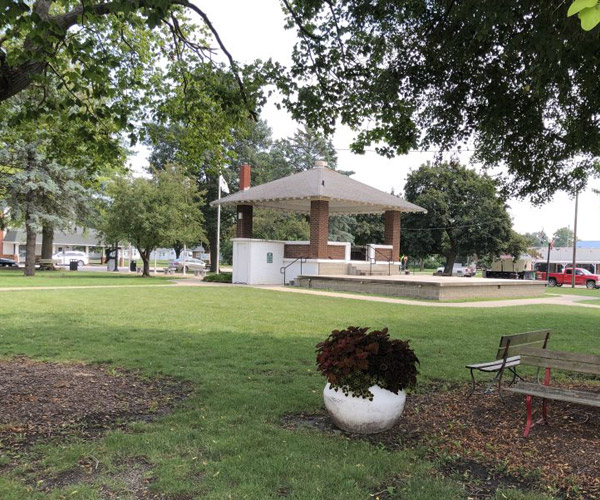
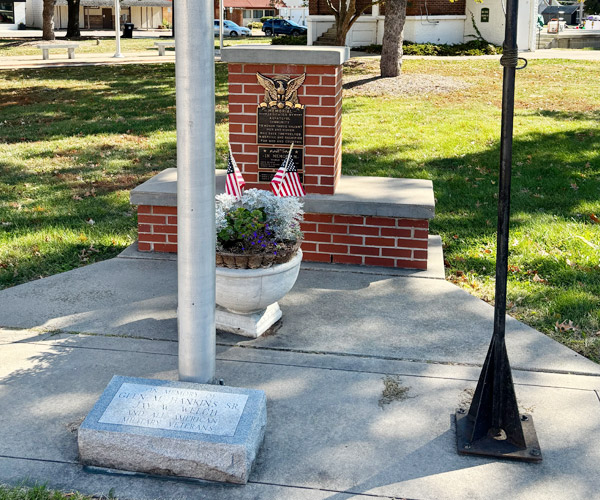
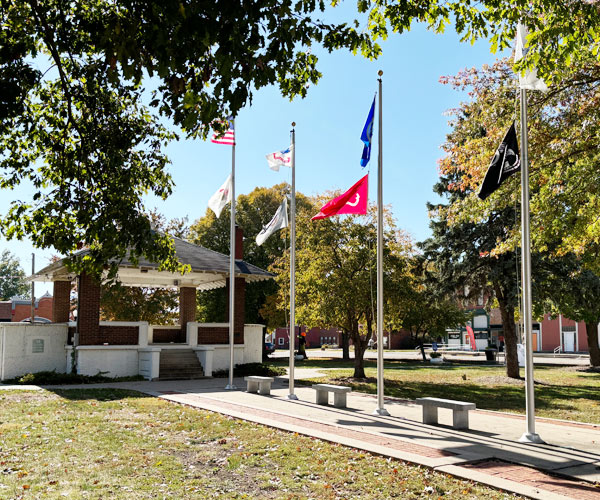
Today, Cuba’s identity is shaped by both its past and present. The town square, anchored by a park and bandstand, remains a focal point of community life. Local businesses, including a well-loved ice cream parlor and coffee shop, contribute to the town’s character. Community organizations such as Cuba Cares play an essential role in volunteerism, beautification, veterans’ memorial maintenance, and seasonal decorations.
Additional online resources
Tale of Two Rivers Books: These books capture personal tales and reflections from people in Cuba and surrounding areas.
Sanborn Fire Insurance Maps from the Library of Congress – See how Cuba developed over time with historic town maps (1893, 1898, 1909, 1919, 1928).
Cuba Middle–Senior High School sustainability case study — A PDF on the design and energy features that made the school a leader in energy-efficient design. Clean Energy Foundation
Oral History of Forgottonia — Mining in Western Illinois — Personal accounts and photos related to early mining in Fulton County and Cuba. The Forgottonia Project
United Electric Coal Company / Cuba Mine photos & historic context — Images and descriptions of strip mining machinery that once operated near town. Towns and Nature
Spoon River Public Library local history resources — Listings of historic local newspapers and materials related to Cuba’s past. Spoon River Library
Cuba Cares — A community group focused on volunteer efforts and improving quality of life in and around Cuba. Cuba Cares Facebook Page